
Last updated
What are the first signs of a full septic tank?
Slow drains in more than one fixture at once is the earliest tell. If your kitchen sink, bathtub and toilet all back up around the same week, that is not a coincidence, that is a tank telling you it is full. Gurgling sounds from the pipes when water runs come next, caused by air trying to escape a tank that has no headspace left. Homeowners searching septic tank pumping cost in Charleston usually start looking after they notice one of these two signs, not before. A residential septic tank is typically pumped every 3 to 5 years, and that interval is driven by tank size and household size, not by a fixed calendar date. If you are unsure where your home falls on that range, how often to pump a septic tank walks through the factors. Charleston homes on well-established septic systems, especially older ones near the James Island Road corridor, tend to hit that upper end of the range faster if the household grew since the tank was installed.
Why does my yard smell like sewage?
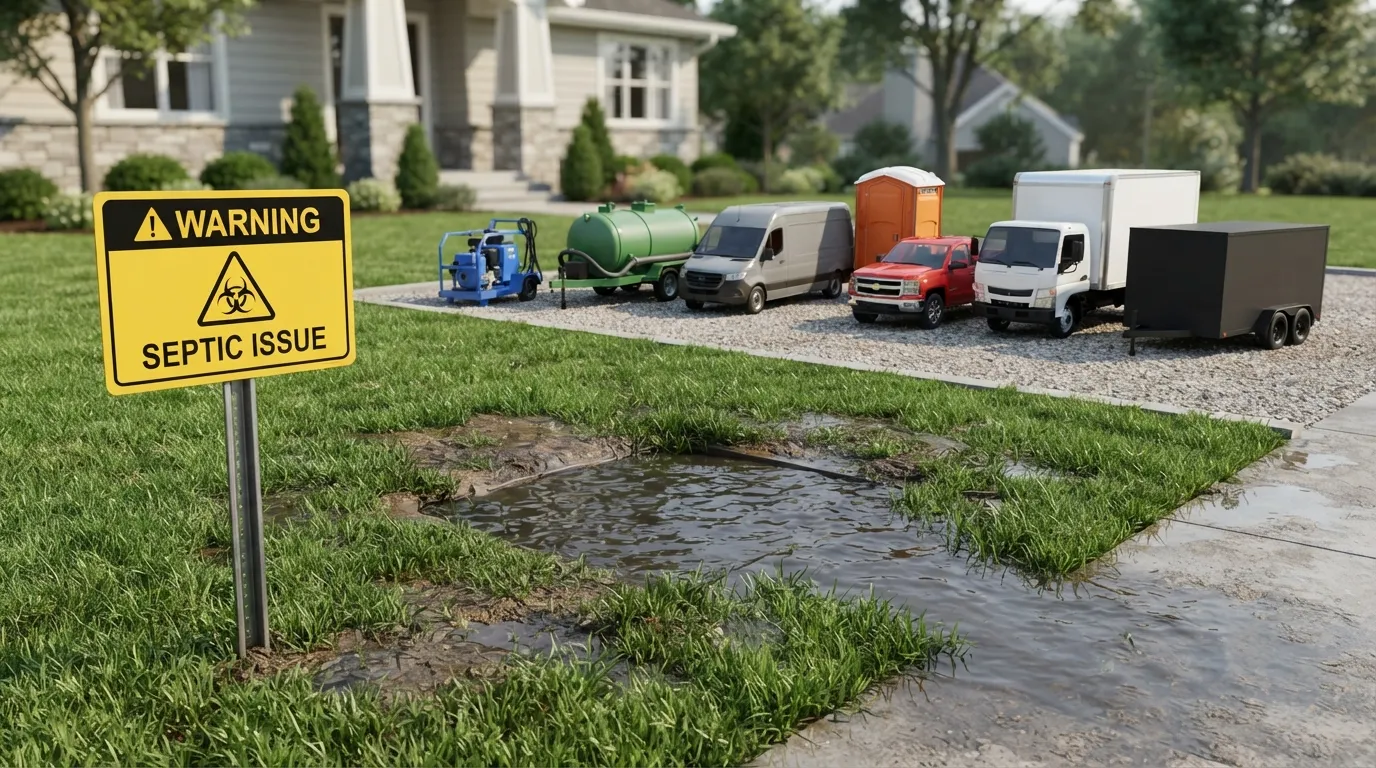
A sewage smell near the tank or drain field means gas is escaping somewhere it should not be, usually a cracked lid, a loose cleanout cap, or a drain field that is failing to absorb effluent. Standing water or unusually green, spongy grass over the drain field is the visual version of the same problem. Both mean the system is past capacity or something underground has broken. This is different from a grease problem in a commercial kitchen, where fats, oils, grease and solids get pumped once they reach 25 percent of the liquid depth in the interceptor. That standard applies to restaurants and food service, covered separately under grease trap pumping, not residential septic tanks. For a home in Charleston, a persistent odor after mowing or rain is reason enough to schedule a look before the smell becomes a backup inside the house. Waiting on a smell is how a routine pumping turns into an emergency call, which is why emergency septic service exists for the cases that got missed too long.

Do slow drains always mean a full tank?
Not always, but slow drains across multiple fixtures at the same time is the pattern worth acting on. A single slow drain is often a local clog. Every drain in the house running slow at once points to the tank or the line leading to it. Toilets that gurgle or bubble when you run the washing machine are showing the same symptom from a different angle: something downstream is backed up or full. If you catch this early, a standard septic tank cleaning resolves it without digging anything up. If you wait until the yard is standing in water, the job gets bigger and sometimes involves repairing the drain field itself. A septic pumping service visit typically costs between 150 and 300 dollars for a daytime appointment based on measured pricing across the region, and that is far cheaper than a system that has to be excavated because it backed up into the house. Charleston's older neighborhoods, and homes further out toward James Island 8.2 miles southwest or Goose Creek 15.8 miles south, tend to be the ones still running original tanks installed before recent construction booms.

When should I call for emergency septic service?
Call immediately if sewage is backing up into a sink, tub or toilet inside the house, or if the drain field has visible standing water. That is no longer a maintenance call, that is a failure in progress. Charleston Porta Pros treats those calls as same-day priority because a backed-up system inside a home is a health issue, not an inconvenience. If the situation involves a rental property, a construction site, or an event where a fixed septic system is not an option at all, a holding tank rental can bridge the gap while the real system gets fixed or replaced. Construction crews working near a compromised septic line sometimes need a temporary fix fast, and pairing a holding tank with portable toilet rental or a restroom trailer rental keeps a job moving without waiting on repair timelines. For general questions on system health before it becomes an emergency, septic tank warning signs is this page, but how often to pump a septic tank and septic tank pumping cost cover the two questions that come right after.
How much does septic pumping cost in Charleston?
A daytime septic pumping appointment runs between 150 and 300 dollars based on measured regional pricing, with weekend service running lower per visit in the 50 to 150 dollar range. Exact cost depends on tank size, access and how much buildup has accumulated. See septic tank pumping cost for a full breakdown.
How often should a septic tank be pumped?
Every 3 to 5 years for most residential tanks, though household size and tank size shift that window. A larger household on a smaller tank may need service closer to the 3 year mark. Details are covered in how often to pump a septic tank.
What happens if I ignore septic warning signs?
Ignoring slow drains, gurgling or standing water usually ends with sewage backing up inside the house or a failed drain field that needs excavation. Both cost more than a routine pumping. Catching signs early keeps the fix simple and avoids emergency septic service altogether.
Can a full septic tank cause toilet backups?
Yes. Once a tank has no remaining capacity, wastewater has nowhere to go and pushes back up through the pipes, usually starting with the lowest fixture in the house. Multiple slow or gurgling drains at once is the clearest early warning before a full backup happens.
Is a bad smell always a septic problem?
Not always, but a sewage odor near the tank lid or drain field usually means gas is escaping through a crack or loose cap. It is worth a quick inspection rather than assuming it will pass, since drain field odor often means the field is already struggling to absorb effluent.

Next step
Get a delivery date
Tell us the address, the dates and the headcount. We size the order and confirm the route.